Elastic Heart: A Vintage Display Font Review for Modern Branding
I opened my laptop on a rainy Tuesday, staring at a blank brand board. The client was a small-batch skincare line that wanted to feel retro but not dated, bold but approachable. They didn't want the sterile look of modern minimalism, nor did they want something too chaotic. I needed a display font that could carry the weight of their identity without screaming for attention. That is when I pulled up Elastic Heart. It wasn't just another download; it felt like finding the missing piece of a puzzle I hadn't fully realized was incomplete.
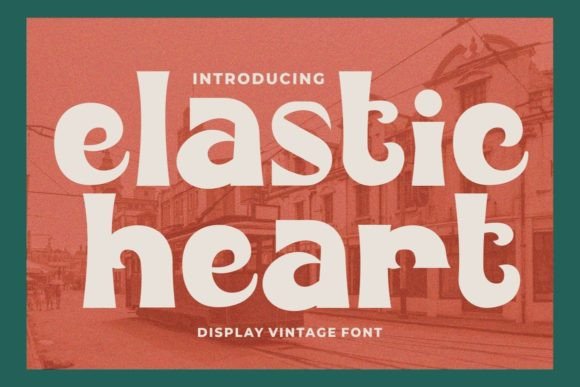
The moment I dragged the type onto the canvas, the vibe shifted immediately. This isn't a standard sans serif or a rigid serif. It is a vintage display font with a personality that feels both groovy and clean. The curves are soft yet confident, creating a visual rhythm that instantly elevates any design asset. Whether I was sketching a logo concept or laying out a social media graphic, Elastic Heart brought an instant sense of character that generic fonts simply cannot replicate.
From Logo Drafts to Packaging Mockups
My first test was the most critical: the logo. For a boutique identity, the typography needs to be memorable but legible. I tried setting the client's name in a few different weights, and Elastic Heart stood out because of its unique structure. The letters have a distinct "elastic" quality, stretching and contracting in a way that feels organic rather than mechanical. When I tested it on a mockup of a glass jar label, the font didn't just sit there; it hugged the curve of the bottle, enhancing the product's artisanal appeal.
In packaging design, this creative font shines particularly well. I placed it on a coffee bag design alongside a hand-drawn illustration, and the vintage aesthetic tied everything together perfectly. The ligatures included in the font family are a game-changer here. Instead of awkward gaps between letters like 'f' and 'i', the ligatures connect them smoothly, giving the text a flowing, handwritten feel even though it is technically a display typeface. This level of detail makes a huge difference in how professional a brand identity looks, especially when printed on physical materials.
I also experimented with Elastic Heart on business cards. While many decorative fonts become illegible at small sizes, this one maintained its charm down to 10 points. However, I noticed that for contact details like phone numbers or addresses, it was better to pair it with a simpler typeface. The font works best as a headline or a primary identifier, not as body text. It commands attention, which is exactly what you want on the front of a card, but you need a supporting typeface to handle the dense information on the back.
Pairing Strategies and Visual Hierarchy
One of the biggest challenges in brand design is balancing a strong display font with supporting elements. Elastic Heart is bold and unique, so it demands respect. If you use it for everything, the design becomes overwhelming. My advice after testing this extensively is to treat it as a hero element. For body copy or secondary information, I recommend pairing it with a clean sans serif font or a classic serif font.
When I paired Elastic Heart with a geometric sans serif for a website header, the contrast was striking. The vintage curves of the display font provided warmth against the sharp lines of the sans serif, creating a modern-retro hybrid look that appeals to contemporary audiences. For editorial designs or blog headers, a script font or a handwritten font can sometimes clash if not chosen carefully. Elastic Heart has enough structure to stand alone, but if you do introduce a script, keep it subtle and ensure the stroke widths don't compete too aggressively.
The multilingual support is another standout feature. In today's global market, brands often need to speak more than one language. Testing Elastic Heart with extended Latin characters revealed that the alternative glyphs were consistent in style. This means you can create a cohesive brand identity for international products without sacrificing the vintage aesthetic. The tons of alternative glyphs allow for endless customization, letting designers tweak the look of specific words to fit the brand's mood perfectly.
Where Elastic Heart Fits Best
- Logo Design: Excellent for wordmarks where uniqueness is key.
- Social Media Graphics: Perfect for Instagram posts and Facebook banners where stopping the scroll is essential.
- Web Design: Ideal for homepage hero sections, navigation bars, and call-to-action buttons.
- Print Assets: Works beautifully on posters, flyers, and event tickets.
- Product Labels: Great for craft beer, cosmetics, and specialty food packaging.
However, there are limitations. This is strictly a display font intended for short phrases, headlines, and titles. It is not suitable for long-form content like blog articles, legal disclaimers, or user manuals. Trying to force Elastic Heart into a paragraph of text will result in poor readability and a cluttered appearance. The human eye needs clear, uniform spacing to process large blocks of text, and the playful nature of this typeface disrupts that flow.
Practical Tips for Implementation
If you are planning to use Elastic Heart in a commercial project, take a moment to review the file formats and webfont availability. Most premium commercial fonts come in OTF, TTF, and WOFF formats, ensuring compatibility across different software and browsers. Before finalizing any client work, I always suggest creating a quick prototype. Test the font on a dark background, a light background, and within a complex image. Check how the ligatures behave with different letter combinations.
Remember to check your commercial font licensing. Using a premium font in a client's branding package, merchandise, or print-on-demand products usually requires a specific license. Ensure you have the rights to use the typeface for the scope of your project, whether it is for a local restaurant logo system or a global e-commerce site. Proper licensing protects both you and your client from legal issues down the road.
Ultimately, Elastic Heart is a versatile tool for any designer looking to inject nostalgia and character into their work. It bridges the gap between old-school charm and modern execution. Whether you are refreshing a café visual identity or launching a handmade shop brand, this typeface offers the flexibility and style needed to make a lasting impression. It proves that a little bit of vintage flair can go a long way in building a memorable and engaging brand.